
From a Minneapolis kid banging on his father’s piano to a genre-defying force of nature. This is the full story of Prince Rogers Nelson.
Who was Prince?

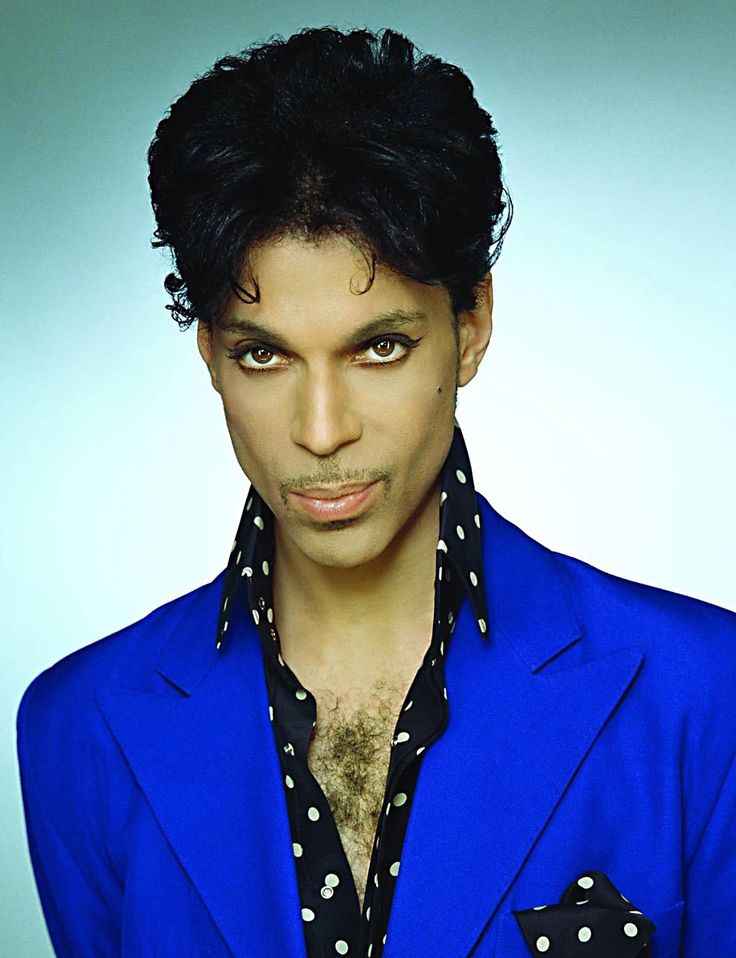
Prince Rogers Nelson (June 7, 1958 – April 21, 2016) was an American singer, songwriter, multi-instrumentalist, record producer, dancer, and filmmaker and even that list feels inadequate. He pioneered what became known as the Minneapolis sound, a genre-blurring fusion of funk, R&B, rock, pop, soul, and new wave that had never existed before him and has never quite been replicated since. Rolling Stone ranked him at number 27 on its list of the 100 Greatest Artists of All Time, but most fans would argue he belongs considerably higher.
Minneapolis beginnings
Prince grew up in Minneapolis, Minnesota, born to a jazz singer mother and a pianist father who left his piano behind when the marriage ended. That piano became Prince’s first instrument and first obsession. By age seven, he had written his first song. By junior high, he had his first band. When he was sixteen, he was working as a session guitarist at a local recording studio.

At just nineteen, he signed with Warner Bros. Records negotiating, remarkably, for complete creative control over his recordings. His debut album For You (1978) carried the credit line “Produced, arranged, composed and performed by Prince.” It wasn’t a boast. It was a statement of intent that he would spend the next four decades living up to.
“He signed his first record deal at nineteen and demanded full creative control. Warner Bros. said yes. The music industry never quite recovered.”
The Purple Rain era when everything changed
After building a cult following through the groundbreaking albums Dirty Mind (1980), Controversy (1981), and 1999 (1982), Prince went supernova in 1984. Purple Rain — the album, the film, the phenomenon — made him the first artist in history to simultaneously hold the number-one spot for a film, an album, and a single in the United States. The album spent 24 consecutive weeks at the top of the Billboard 200 and earned him an Academy Award for Best Original Song Score.

Tracks like “When Doves Cry” (which famously had no bass line), “Let’s Go Crazy,” and the title ballad “Purple Rain” showed a musician who understood that pop music could carry emotional weight without sacrificing groove. The accompanying film, semi-autobiographical and raw, turned him into a global icon. It is one of the defining cultural moments of the 1980s.
Sign o’ the Times, the case for the greatest album ever made
If Purple Rain made Prince a star, Sign o’ the Times (1987) made the argument that he was something rarer: a genuine artist without peer. The double album covered drug addiction, gang violence, AIDS, natural disaster, and spiritual longing all over music that could shift from Minneapolis funk to spare balladry to psychedelic rock within a single disc. Critics have debated for nearly four decades which album is the greatest ever made, and Sign o’ the Times appears on nearly every serious shortlist.
The Warner Bros. war and the Love Symbol
By the early 1990s, Prince’s relationship with his label had turned adversarial. Frustrated by Warner Bros.’ control over his recordings and release schedule, he took a dramatic stand: in 1993, he changed his name to an unpronounceable glyph, a combination of the symbols for male and female — and began writing the word “slave” on his cheek in public appearances. The press called him “The Artist Formerly Known as Prince,” or simply “The Artist.” It was widely mocked at the time. In retrospect, it was one of the most effective protests against corporate control of artists’ rights in pop history, predating by decades the conversation that now happens routinely around streaming royalties and catalogue ownership.
He reverted to Prince in 1999, when his Warner Bros. contract expired. He had won.

Why Prince still matters in 2026?
Prince died on April 21, 2016, at his Paisley Park Studios in Chanhassen, Minnesota. In the weeks that followed, 19 of his albums charted on the Billboard 200 simultaneously, he became the first and only artist ever to have five albums in the top ten at the same time. Pantone created a new shade of purple in his honor: Love Symbol #2.
But his true legacy lives in the music and in the musicians who followed him. His influence runs through the work of Bruno Mars, Janelle Monáe, Frank Ocean, The Weeknd, H.E.R., and countless others who cite his fearlessness about genre, sexuality, and self-determination as foundational. He mentored artists from Sheila E. to Alicia Keys. Also, he held onto his masters at a time when no one talked about artists owning their work. He played guitar at the Rock and Roll Hall of Fame induction ceremony for George Harrison and delivered a solo so transcendent that the other guitarists on stage visibly stopped playing to watch.
And in a vault beneath Paisley Park, enough unreleased material remains to fill a new album every year for the next hundred years. Prince didn’t just make music. He built a world.

9 Wild Facts About Prince That Make Him Even More Fascinating
- He turned down Michael Jackson’s “Bad” over one line
Michael Jackson wrote “Bad” as a duet, intending Prince to play opposite him in the video. Prince said no. His reasoning? The first line of the song is “your butt is mine” and as he later put it: “Who’s gonna sing that to whom?” A missed collaboration that would have broken the internet a decade before the internet existed.
2. He scrapped an entire album because of ecstasy and a “demon” named Spooky Electric
“The Black Album” was days from release in 1987 when Prince went clubbing, reportedly took ecstasy, went home, saw his miserable reflection in the jet-black album cover and pulled the whole thing. He blamed a demonic entity he called “Spooky Electric” and ordered the label to destroy the stock. They complied for seven years. When Warner Bros. eventually forced a release in 1994, it flopped. The demon was right.
3. “When Doves Cry” has no bass line and that was the point
After the track was fully mixed, Prince removed the bass line entirely, making it one of the most unconventional number-one dance singles in history. He wanted it starker. Stranger. Nobody else in 1984 was making that call on the song that would define their career. It worked.
4. He went door-to-door as a Jehovah’s Witness — in Minneapolis, in 2003
After converting in 2001, Prince actually knocked on doors with copies of the Watchtower. One woman opened hers to find Prince standing there. After confirming she wasn’t on a hidden camera show, she told him she was Jewish. He stayed for 25 minutes, reading scriptures about Israel, then disappeared, leaving only a pamphlet behind.
“He knocked on a stranger’s door in Minneapolis to talk about scripture. She thought she was being pranked. She was not.”
5. He played guitar on Madonna’s “Like a Prayer” and most of it got cut
Prince contributed guitar and vocals to the track, and according to co-writer Patrick Leonard, he recorded a huge amount of material. Madonna and her team cut most of it. The two were briefly romantically linked around the same time. The aftermath was, by all accounts, frosty.

6. He was epileptic as a child and said an angel cured him
Prince rarely spoke about this publicly, but he was born with epilepsy and suffered seizures throughout early childhood. He told PBS that one day he walked up to his mother and said: “Mom, I’m not going to be sick anymore because an angel told me so.” The seizures stopped. He was seven years old.
7. He built his own Las Vegas nightclub, played six months, then just left
When other artists were booking residencies at existing Vegas venues, Prince decided to build his own club specifically for a 2006 residency. He played two shows a week for six months, then departed to go on tour leaving behind a purpose-built venue nobody else knew what to do with.
8. As a broke teenager, he’d stand outside McDonald’s just to smell the food
Before the fame, Prince couldn’t afford fast food. He would stand outside a McDonald’s on Plymouth Avenue in Minneapolis just to smell it. He later became a PETA-endorsed vegan who refused to eat anything “with parents.” The arc is remarkable.
9. The vault beneath Paisley Park may contain 100 years’ worth of unreleased music
Prince recorded constantly, obsessively. The custom-built vault under Paisley Park reportedly holds enough completed, fully produced albums to release one new Prince record every year for the next century plus over 50 finished music videos. The greatest artist you’ll never fully hear.


Leave a Reply